
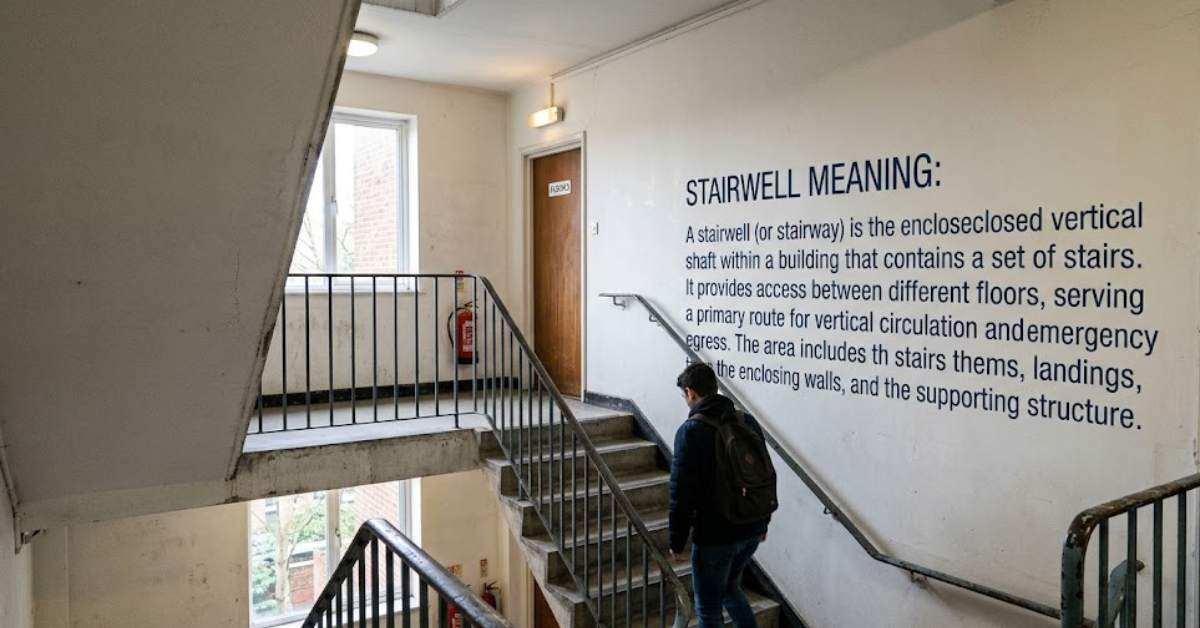
Have you ever walked through an apartment building, office tower, or hotel and heard someone refer to a “stairwell”? If so, you may have wondered about the stairwell meaning and how it differs from a staircase.
Although many people use the terms interchangeably, a stairwell and a staircase are not exactly the same thing. Understanding the distinction can help when discussing building layouts, architecture, safety features, and emergency exits. In this guide, we’ll explain what is a stairwell, compare a stairwell vs staircase, and explore why stairwells play such an important role in modern buildings.
What Is a Stairwell?
A stairwell is the vertical shaft or enclosed space within a building that contains one or more flights of stairs connecting different floors.
Think of it this way:
- The stairs are the steps you walk on.
- The staircase is the entire stair structure.
- The stairwell is the space surrounding and housing the staircase.
In multi-story buildings, stairwells often extend from the ground floor to the top floor, creating a dedicated passageway for movement between levels.
Simple Example
Imagine a five-story apartment building:
- The steps and railings form the staircase.
- The enclosed area surrounding those stairs is the stairwell.
This distinction becomes especially important in architecture, construction, and fire safety planning.
Stairwell Meaning in Building Design
In architectural terms, a stairwell serves several purposes beyond simply housing stairs.
Key Functions of a Stairwell
- Provides access between floors
- Serves as an emergency evacuation route
- Helps separate fire zones
- Improves building circulation
- Supports accessibility planning
Many commercial and residential buildings are required by building codes to have properly designed stairwells for safety reasons.
Stairwell vs Staircase: What’s the Difference?
One of the most common questions people ask is about stairwell vs staircase.
Here’s a simple comparison:
| Feature | Stairwell | Staircase |
| Definition | Enclosed space containing stairs | The actual structure of stairs |
| Includes walls? | Yes | No |
| Includes landings? | Usually | Usually |
| Architectural space | Yes | No |
| Used for movement between floors | Yes | Yes |
Easy Way to Remember
A staircase is what you climb.
A stairwell is the area that contains the staircase.
For example, when firefighters discuss emergency exits, they typically refer to the stairwell rather than just the stairs because the entire enclosure matters for safety.
Types of Stairwells
Not all stairwells are designed the same way. Different buildings use different configurations depending on size, purpose, and local regulations.
1. Enclosed Stairwell
This is the most common type.
Features include:
- Fire-resistant walls
- Emergency lighting
- Ventilation systems
- Self-closing fire doors
You’ll typically find these in offices, schools, hospitals, and apartment buildings.
2. Open Stairwell
An open stairwell lacks full enclosure and is often found in homes or smaller buildings.
Benefits include:
- Better natural light
- Open appearance
- Improved aesthetics
3. Emergency Stairwell
These stairwells are specifically designed for evacuation during emergencies.
They often include:
- Fire-rated construction
- Emergency signage
- Backup lighting
- Smoke-control systems
Why Are Stairwells Important for Safety?
The importance of a stairwell goes far beyond convenience.
During Emergencies
In fires, earthquakes, or power outages, elevators may become unsafe or unusable. Stairwells provide a reliable evacuation route.
Safety benefits include:
- Protected escape paths
- Reduced smoke exposure
- Faster evacuation
- Access for emergency responders
Because of these benefits, building codes worldwide place strict requirements on stairwell construction.
Common Features Found in a Stairwell
Most modern stairwells include several standard components.
Structural Elements
- Stair flights
- Landings
- Handrails
- Guardrails
- Walls and enclosures
Safety Features
- Exit signs
- Emergency lighting
- Fire-resistant materials
- Ventilation systems
- Security cameras in some buildings
These features help ensure safe movement throughout the building.
Examples of Stairwells in Everyday Life
You encounter stairwells more often than you may realize.
Common Locations
- Apartment complexes
- Hotels
- Shopping centers
- Schools
- Office buildings
- Hospitals
- Parking garages
Whenever you use a designated emergency exit stair area, you’re typically walking through a stairwell.
Architectural Considerations for Stairwells
Architects carefully design stairwells to balance safety, functionality, and appearance.
Factors considered include:
- Building occupancy
- Fire safety regulations
- Accessibility requirements
- Traffic flow
- Ventilation needs
- Structural integrity
In high-rise buildings, stairwell placement can significantly impact evacuation efficiency during emergencies.
Frequently Asked Questions
What is a stairwell?
A stairwell is the enclosed vertical space in a building that contains stairs connecting different floors.
What is the difference between a stairwell and a staircase?
A staircase refers to the actual stairs and supporting structure, while a stairwell is the surrounding area that houses the staircase.
Why are stairwells enclosed?
Many stairwells are enclosed to improve fire protection, control smoke movement, and provide a safer evacuation route during emergencies.
Are stairwells required by building codes?
In most multi-story commercial and residential buildings, building codes require stairwells that meet specific safety standards.
Can a house have a stairwell?
Yes. Homes with multiple floors may have stairwells, although the term is more commonly used for larger buildings and enclosed stair spaces.
Are stairwells and emergency exits the same thing?
Not exactly. A stairwell may serve as an emergency exit route, but it is the enclosed space containing the stairs, not the exit itself.
Conclusion
Understanding the stairwell meaning is easier once you know that a stairwell is the enclosed space that contains a staircase. While many people use the terms interchangeably, recognizing the distinction between a stairwell vs staircase can improve your understanding of architecture, building safety, and emergency planning.
The next time someone asks what is a stairwell, you’ll know it’s much more than just a set of stairs—it’s a critical part of a building’s design, providing safe and efficient movement between floors while serving as an essential emergency escape route.