
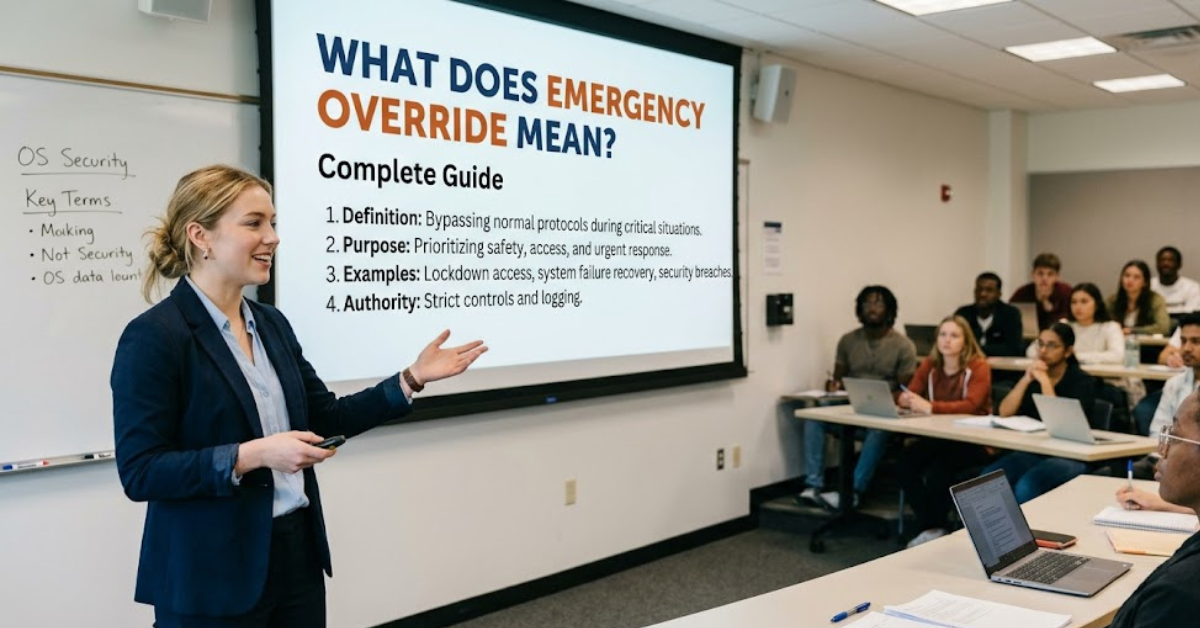
Imagine a system designed to run safely on its own—until something goes wrong. That’s where emergency override comes in. If you’ve ever wondered what does emergency override mean, you’re not alone. It’s a term used in everything from cars and elevators to security systems and industrial machines.
In simple terms, an emergency override allows a person to bypass normal operations during a critical situation. This article breaks down exactly what it is, how it works, and why it matters—without the jargon.
What Does Emergency Override Mean?
At its core, emergency override refers to a manual or automatic function that temporarily bypasses standard controls or safety restrictions during an urgent situation.
In plain English:
It’s a “break-the-rules” button used only when something unusual or dangerous happens.
Key idea:
- It overrides normal system behavior
- It is used only in emergencies
- It prioritizes safety, access, or control
So when people ask what is emergency override, the answer is straightforward: it’s a backup control mechanism designed for critical moments.
What Does Emergency Override Do?
Understanding what does emergency override do becomes easier when you look at real-life scenarios.
Common functions include:
- Unlocking restricted systems (like doors during a fire)
- Stopping machinery instantly to prevent injury
- Allowing manual control when automation fails
- Restoring access when systems lock users out
Example:
In an elevator, emergency override allows firefighters to take control, ignoring normal floor requests so they can respond quickly.
In short, it ensures that human intervention is possible when automation isn’t enough.
Where Is Emergency Override Used?
Emergency override systems are more common than most people realize. They’re built into many everyday technologies.
1. Vehicles
Modern cars may include override features to:
- Disable cruise control in emergencies
- Allow engine shutdown
- Bypass electronic malfunctions
2. Elevators
Used by emergency responders to:
- Take exclusive control
- Prevent automatic stops
- Prioritize rescue operations
3. Security Systems
Overrides allow:
- Emergency access to locked buildings
- Alarm bypass for authorized personnel
- Quick entry during crises
4. Industrial Equipment
In factories, override systems:
- Shut down machines instantly
- Prevent accidents
- Allow manual intervention
5. HVAC and Building Systems
Used to:
- Force ventilation during fires
- Control airflow in emergencies
- Override automated climate settings
Types of Emergency Override Systems
Not all overrides work the same way. They vary depending on the system and its purpose.
Manual Override
- Activated by a person
- Examples: buttons, switches, keys
Automatic Override
- Triggered by sensors or system logic
- Example: fire alarms unlocking doors automatically
Remote Override
- Controlled from a central system
- Common in security or industrial setups
Why Emergency Override Is Important
Without an override function, systems would be rigid—and potentially dangerous.
Here’s why it matters:
- Safety First: Prevents injuries or fatalities
- Control in Chaos: Gives humans authority during system failures
- Flexibility: Allows adaptation in unexpected situations
- Reliability: Acts as a backup when automation fails
Think of it as a safety net for technology.
Risks and Limitations
While essential, emergency overrides aren’t without downsides.
Potential risks:
- Misuse or unauthorized access
- System abuse leading to damage
- Security vulnerabilities if not properly controlled
That’s why most systems:
- Restrict access
- Require authorization
- Log override usage
When Should Emergency Override Be Used?
Emergency override should only be used in genuine urgent situations.
Appropriate situations include:
- Equipment failure
- Safety threats
- Fire or evacuation scenarios
- System malfunctions
Using it unnecessarily can:
- Damage systems
- Compromise safety
- Create legal issues
FAQs
What is emergency override in simple terms?
It’s a feature that lets you bypass normal system controls during an emergency to take immediate action.
What does emergency override do in a car?
It allows the driver to regain control if automated systems fail, such as overriding cruise control or shutting down the engine.
Is emergency override safe to use?
Yes—when used correctly. It’s designed for safety, but misuse can cause problems.
Who can access emergency override?
Usually authorized personnel, such as technicians, emergency responders, or system operators.
Is emergency override automatic or manual?
It can be either. Some systems trigger it automatically, while others require manual activation.
Conclusion
So, what does emergency override mean? It’s a critical safety feature that allows systems to be bypassed during urgent situations. Whether it’s stopping a machine, unlocking a door, or taking control of an automated process, emergency override ensures that humans can step in when it matters most.
Understanding how it works helps you appreciate the balance between automation and control. If you’re dealing with systems that include this feature, take time to learn when—and how—to use it properly. It could make all the difference in a critical moment.