
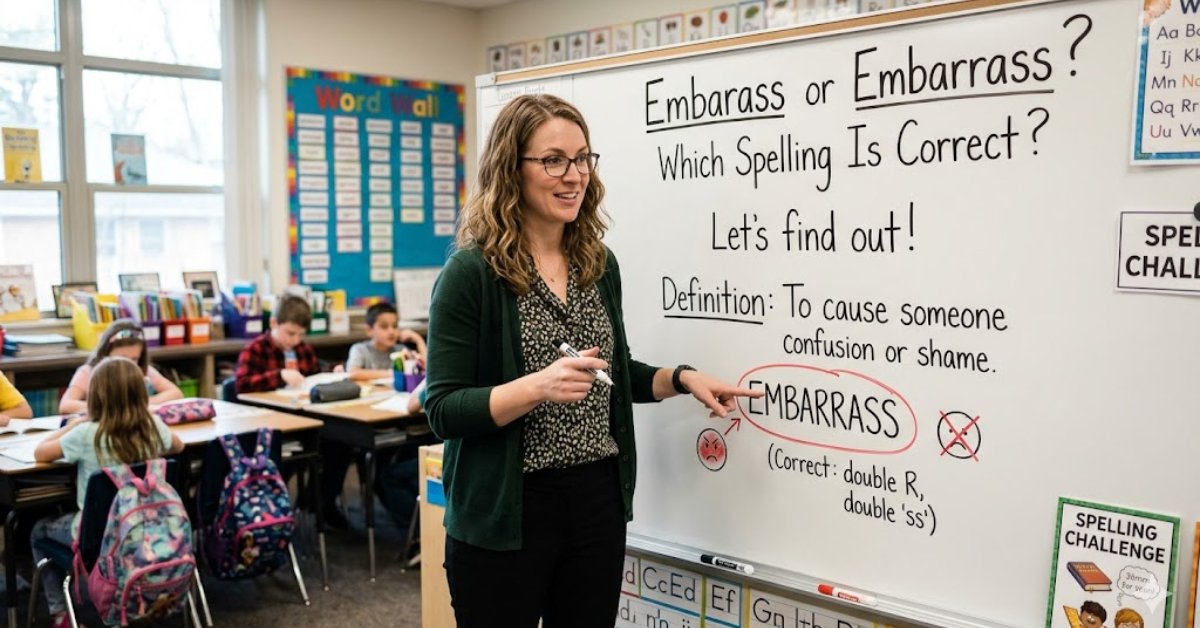
If you’ve ever paused while typing and wondered whether it’s “embarass” or “embarrass,” you’re definitely not alone. This is one of the most commonly misspelled words in English, and even confident writers get tripped up by it.
The confusion usually comes from the double letters. Should it have one “r” or two? One “s” or two? The answer is simple once you understand the pattern. In this article, you’ll learn the correct spelling, why people often get it wrong, and how to remember it easily in the future.
Embarass or Embarrass: What’s the Correct Spelling?
The correct spelling is “embarrass.”
“Embarass” is incorrect and not recognized as a proper English spelling.
The word “embarrass” means to make someone feel awkward, ashamed, uncomfortable, or self-conscious. It can also describe situations that create social discomfort.
Examples:
- I didn’t mean to embarrass you in front of your friends.
- Public speaking used to embarrass him.
- She felt embarrassed after forgetting his name.
The mistake happens because the word contains both double “r” and double “s,” which makes it visually confusing.
Why Do People Misspell “Embarrass”?
English spelling rules are not always predictable, and this word is a perfect example. Many people instinctively simplify the spelling by removing one of the repeated letters.
Here are the main reasons the error is so common:
Double Letters Create Confusion
Words with repeated consonants are harder to remember, especially when pronunciation doesn’t strongly emphasize them.
For example:
- embarrass
- accommodate
- occurrence
- necessary
These words are frequently misspelled because they contain multiple repeated letters.
Pronunciation Doesn’t Help Much
When spoken aloud, “embarrass” sounds smooth and fast. Most people don’t clearly hear the double “r” and double “s,” so they rely on guesswork while writing.
Typing Habits and Autocorrect
Fast typing often leads to missing letters. Some people also become too dependent on spellcheck, which means they never fully memorize the correct spelling.
Easy Trick to Remember the Correct Spelling
A simple memory trick can make this word stick instantly.
Think of it this way:
“Embarrass” has:
- Two R’s
- Two S’s
You can remember it with this phrase:
“Being embarrassed is really stressful.”
The word “really” reminds you of the double “r,” while “stressful” hints at the double “s.”
Another easy method is to break the word into parts:
Em + barr + ass
Seeing the structure visually often helps with memory retention.
Meaning and Usage of “Embarrass”
The verb “embarrass” is used when someone causes discomfort, awkwardness, or shame.
It can apply to social situations, emotional reactions, or accidental mistakes.
Common Situations Where the Word Is Used
Social Mistakes
People often feel embarrassed after saying something awkward or inappropriate.
Example:
- He accidentally called his teacher “Mom,” which embarrassed him instantly.
Public Attention
Some people dislike being the center of attention because it makes them uncomfortable.
Example:
- Singing in public would embarrass her.
Personal Failures
Mistakes and failures can create embarrassment, especially in professional settings.
Example:
- Forgetting the presentation notes embarrassed the manager.
Common Grammar Forms of the Word
Understanding the different forms of the word can also help you remember the spelling.
Embarrass (Verb)
This is the base form.
Example:
- Don’t embarrass your brother in front of guests.
Embarrassed (Adjective)
Used to describe how someone feels.
Example:
- She looked embarrassed after tripping on stage.
Embarrassing (Adjective)
Describes a situation or event.
Example:
- That was an embarrassing moment.
Embarrassment (Noun)
Refers to the feeling itself.
Example:
- He laughed to hide his embarrassment.
Commonly Misspelled Words Similar to “Embarrass”
People who struggle with this spelling often have trouble with similar words too.
Here are a few examples:
- Occurred
- Maintenance
- Recommend
- Separate
- Achievement
- Questionnaire
The best way to improve spelling accuracy is repeated exposure through reading and writing.
Tips to Avoid Spelling Mistakes
Improving spelling doesn’t require memorizing endless grammar rules. Small habits make a big difference over time.
Read More Often
Frequent reading naturally improves word recognition. The more often you see correctly spelled words, the easier they become to remember.
Write Words by Hand
Writing difficult words repeatedly can strengthen memory far better than typing alone.
Use Mnemonics
Memory tricks work especially well for words with repeated letters.
Slow Down While Typing
Many spelling mistakes happen because people type faster than they think.
Is “Embarrass” Hard for Native English Speakers Too?
Absolutely. Even native speakers misspell this word regularly. English contains many words borrowed from other languages, which makes spelling inconsistent.
“Embarrass” originally comes from French and Spanish roots, which partly explains its unusual structure.
So if you’ve made this mistake before, you’re in good company.
How Dictionaries Define “Embarrass”
Most dictionaries define the word as:
“To cause someone to feel awkward, self-conscious, or ashamed.”
The meaning has remained fairly consistent over time, especially in conversational English.
FAQs
Is “embarass” ever correct?
No. “Embarass” is always considered a misspelling. The correct form is “embarrass.”
Why does “embarrass” have double letters?
The spelling comes from older language roots and evolved into modern English with both double “r” and double “s.”
How can I remember the spelling of “embarrass”?
Use a memory trick like:
“Being embarrassed is really stressful.”
This helps you remember the double “r” and double “s.”
What does “embarrass” mean?
It means to make someone feel awkward, ashamed, uncomfortable, or self-conscious.
Is “embarrassed” spelled the same way?
Yes. “Embarrassed” keeps the same double letters as the base word.
Conclusion
The debate around embarass or embarrass has a very clear answer: “embarrass” is the only correct spelling. While the double letters can make the word difficult to remember, a few simple memory tricks and regular exposure can help you avoid the mistake permanently.
Spelling errors are common, especially with tricky English words, so there’s no reason to feel embarrassed about getting it wrong in the past. What matters is recognizing the correct form and using it confidently moving forward.
If you want to sharpen your grammar and writing skills further, keep exploring commonly confused words and everyday language mistakes. Small improvements in spelling can make your communication much clearer and more professional.