The debate around cringy or cringey has taken over social media, comment sections, and even everyday conversations. If you’ve ever paused while typing and wondered, “is it cringy or cringey?”—you’re definitely not alone.
The focus keyword cringy or cringey refers to slang used to describe something awkward, embarrassing, or uncomfortable to watch. While both versions are widely used, only one is traditionally considered standard. In this article, we’ll break down the meaning, correct spelling, usage, and real-life examples so you never second-guess it again.
What Does Cringy or Cringey Mean?
At its core, both cringy or cringey describe something that causes secondhand embarrassment or discomfort.
Common meanings include:
- Awkward behavior in social situations
- Over-the-top or try-hard content online
- Embarrassing moments that make you “cringe”
- Uncomfortable dialogue, jokes, or performances
The word comes from the verb “to cringe,” meaning to recoil or feel embarrassed.
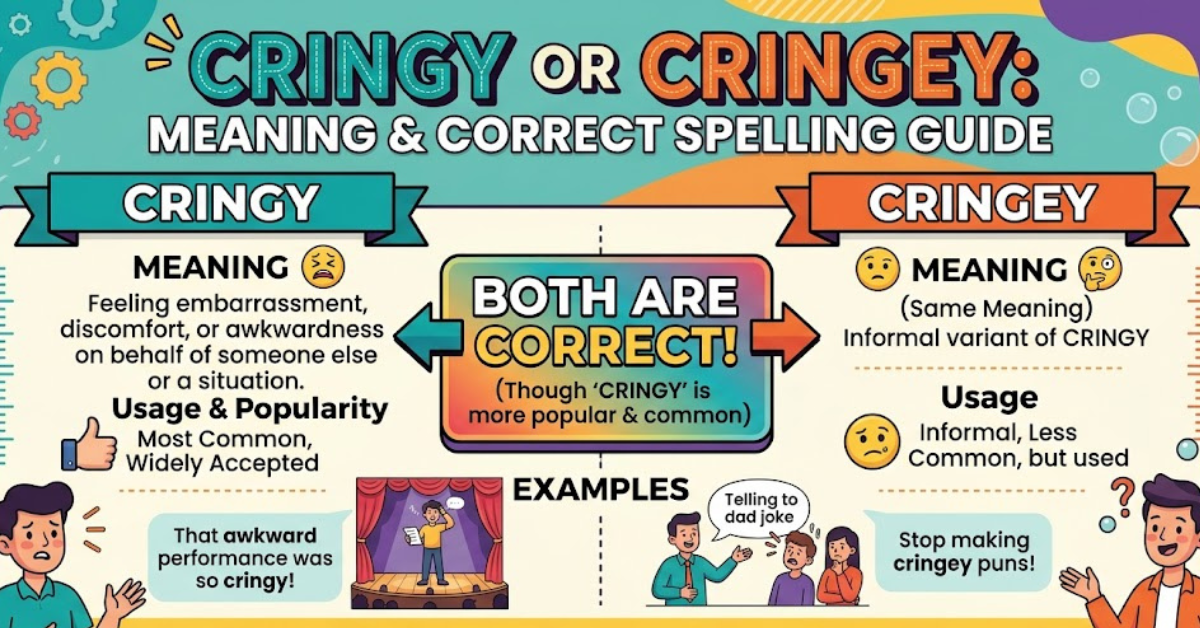
Cringy or Cringey: Which Spelling Is Correct?
This is where things get interesting.
Cringey Preferred Spelling
- More commonly accepted in dictionaries
- Follows standard English adjective formation (cringe → cringey)
- Used in more formal or edited writing
Cringy Informal Variant
- Still widely used online and in casual speech
- Shorter and simpler spelling
- Considered less formal, but not incorrect in modern usage
So, is it cringy or cringey?
Technically, cringey is the more accepted spelling, but cringy is extremely common in internet slang.
Why “Cringy or Cringey” Became So Popular
The rise of memes, TikTok culture, and online commentary helped both versions spread rapidly. People use the term to react instantly to awkward or overdone content.
Key reasons for popularity:
- Social media reactions and memes
- Youth slang evolution
- Easy expression of embarrassment or humor
- Viral videos and comment culture
Language online evolves fast, and this is a perfect example of that shift.
How to Use Cringy or Cringey in Sentences
Here are some natural examples:
- “That speech was so cringey I couldn’t watch it.”
- “His pickup line was honestly cringy.”
- “The video went viral because it was painfully cringey.”
- “I tried to act cool, but it came out cringy instead.”
Both spellings work in casual contexts, especially online.
Common Situations People Call “Cringy”
1. Social Media Posts
Over-edited selfies, forced captions, or attention-seeking trends.
2. Awkward Conversations
Forced jokes or unnatural flirting often fall into this category.
3. Public Speeches
Overacting or trying too hard to impress an audience.
4. Viral Content
Videos that miss the mark but gain attention for being uncomfortable to watch.
Cringy vs Cringey: Quick Comparison
| Feature | Cringy | Cringey |
| Formal use | Less preferred | More accepted |
| Internet slang | Very common | Common |
| Dictionary use | Rare | More recognized |
| Tone | Casual | Neutral |
FAQs About Cringy or Cringey
1. Is it cringy or cringey in British English?
Both are used, but cringey is more widely accepted in formal English.
2. Is “cringy” a real word?
Yes, it’s an informal variant of “cringey” and widely understood.
3. Why do people say cringey instead of cringe?
“Cringey” works as an adjective, while “cringe” is usually a verb or noun.
4. Can I use cringy in essays or formal writing?
It’s better to use cringey or rephrase it as “embarrassing” or “awkward.”
5. What is the difference between cringe and cringey?
“Cringe” is the action or feeling, while “cringey” describes something that causes that feeling.
Conclusion
The confusion between cringy or cringey comes down to evolving internet language versus traditional grammar rules. While cringey is the more accepted spelling in formal contexts, cringy remains widely used in casual online communication.
So, the next time you find yourself wondering “is it cringy or cringey?”, you’ll know both are understood—but choosing cringey keeps your writing slightly more polished.
If you’re interested in more language breakdowns like this, exploring slang evolution and modern English usage can be surprisingly insightful.